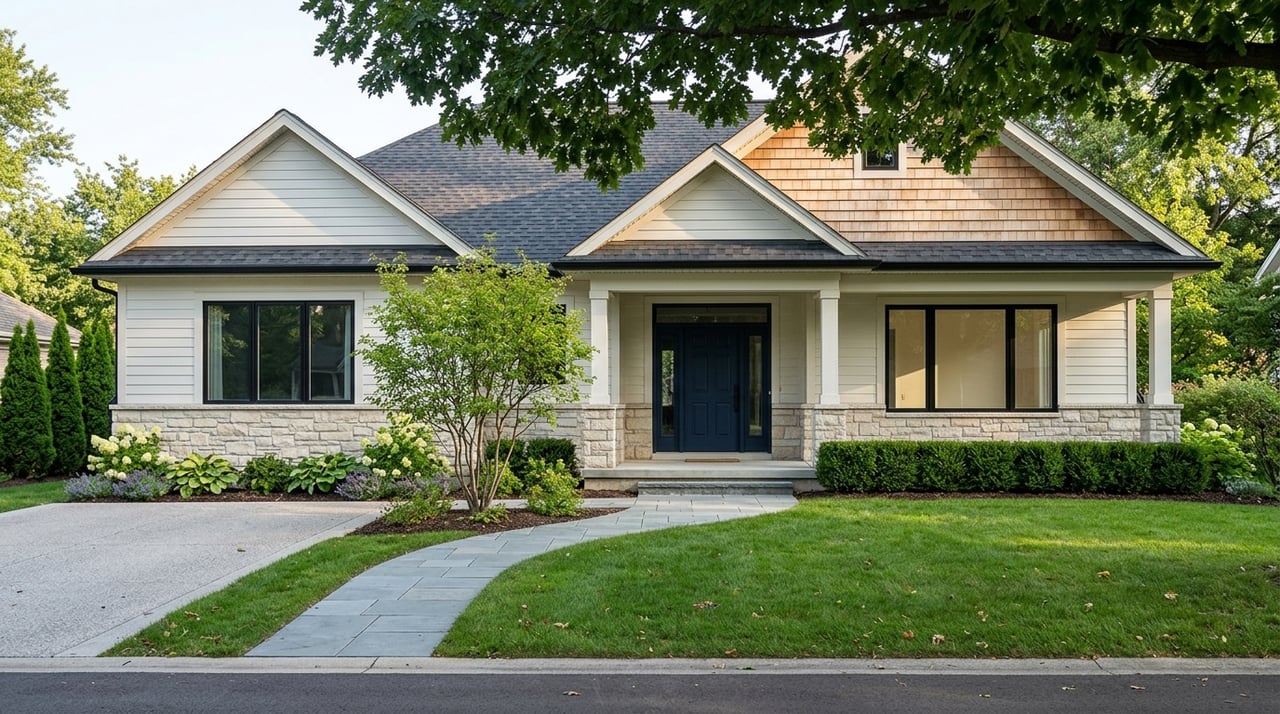
Building Or Buying A Custom Home In Southwest Oakville
May 21, 2026
May 21, 2026
If you are thinking about a custom home in Southwest Oakville, the first big question is usually not design. It is whether building from the ground up makes more sense than buying a finished home in one of Halton’s most valuable and closely regulated low-density areas. That can feel like a high-stakes choice, especially when land, approvals, timing, and resale all matter. In this guide, you will get a practical way to compare both paths so you can make a more confident decision. Let’s dive in.
Southwest Oakville is not a simple build market. The Town of Oakville is actively reviewing zoning rules for detached and semi-detached homes in low-density residential zones south of Dundas Street, including topics like driveways, yards, lot coverage, landscaping, and compatibility.
That matters because low-density housing still makes up 64% of Oakville’s housing stock, and the town’s policy direction is focused on neighbourhood stability, local character, and directing growth to strategic growth areas. In plain terms, if you want to build here, the lot and the rules matter almost as much as the house itself.
There is also a strong price backdrop. TRREB’s February 2026 data shows Oakville detached homes at about $1.87 million on average, with a median of $1.582 million and 29 days on market. In a market like this, a large share of value often sits in the land, location, and what the site can legally support.
For most buyers in Southwest Oakville, the decision comes down to control versus certainty. Building gives you the chance to tailor layout, finishes, and function to your exact needs. Buying an existing custom home usually gives you a clearer timeline, fewer approvals, and less execution risk.
That does not mean one choice is always better. It means the right answer depends on your budget, timeline, tolerance for complexity, and how specific your wish list really is.
Building can be the better path if you want a home that fits your lifestyle very precisely and you are prepared for the approval process. It can also make sense if you find a lot or teardown with the right dimensions, zoning fit, and manageable site constraints.
You may lean toward building if:
Buying an existing custom home is often the cleaner option if speed and predictability matter most. You can assess the finished product, understand the street and lot in real time, and avoid many of the moving parts that come with demolition and new construction.
You may lean toward buying if:
In Southwest Oakville, a custom build starts with zoning. Oakville states that zoning regulates land use, building location, lot coverage, height, and minimum lot dimensions, so your first check is whether the property can support what you want to build.
From there, a new house typically requires a detailed package of plans and approvals. Oakville lists items such as a site plan, architectural drawings, engineered truss packages, HVAC load calculations, an energy efficiency summary, a grading plan and declaration, a tree protection declaration, Halton Region service permits, and Conservation Halton approval if applicable.
The town also recommends working with an architect, professional engineer, or qualified designer. That is a practical reminder that building here is a team effort, not a solo project.
If you are buying a teardown, demolition is not just a quick pre-build task. Oakville requires a separate demolition permit, and utility clearances alone should be allowed 6 to 8 weeks for sign-offs.
There is another key point many buyers miss. Oakville says a demolition permit can only be issued once the replacement building permit is ready, so timing between the two steps needs to be coordinated carefully.
Southwest Oakville lots are not all equal. If your project includes excavation and backs onto green space, a river bed, or a wetland, Conservation Halton approval is required.
Oakville also notes creek flooding and Lake Ontario shoreline flooding risks in some areas. This is one reason a lot that looks promising online may become far more complicated after proper due diligence.
Tree protection is a major local factor. Oakville requires a permit and on-site consultation before removing any private tree with a trunk larger than 15 cm at breast height, and the town says about half of Oakville’s urban forest is on private property.
For new-house submissions, a tree protection declaration is also required. If the lot has mature trees, that can affect your siting, driveway plan, and site work budget.
Some South Oakville properties are in or near heritage-protected areas. If a property is designated or sits in a heritage conservation district, a heritage permit may be required before changes can move forward.
Oakville notes that heritage permit reviews are handled through monthly committee meetings, which can add time to your project. If you are comparing a teardown to a finished custom home, this is an important variable to understand early.
In Southwest Oakville, the purchase price is only the starting line. A smart custom-home budget separates land, demolition, soft costs, municipal charges, and hard construction costs.
Oakville also notes that new construction or property improvements can trigger supplementary assessment and later tax bills from MPAC. On severed lots and vacant properties, development and other charges such as cash in lieu of parkland dedication may also apply.
Here are some public charges and fees that can affect the math:
These numbers help show why a build budget can move quickly, even before construction starts.
A Toronto-area baseline can help frame expectations, but it should not be treated as an Oakville quote. Using Altus Group’s 2025 Canadian Cost Guide, NerdWallet estimates Toronto single-family construction at roughly $400,000 to $550,000 for a 2,000-square-foot home, excluding land.
For Southwest Oakville, that should be viewed as a broad baseline, not a final budget. Site work, drainage, tree removal, demolition, finish level, and municipal charges can all push the real total higher.
This is where a disciplined, finance-first review matters. If you are comparing a teardown and build to a finished custom resale, you want to look at the full cost stack, not just the sticker price.
Oakville says permit review times vary based on volume, complexity, staffing, and resubmissions, and the town recommends applying well in advance. Because a new house involves multiple approvals, building is usually the longer path.
As a general Canadian benchmark, a custom home can take up to two years from design through construction. That does not mean every project will take that long, but it does show why timeline risk should be part of your decision.
If your move has a fixed deadline, buying an existing custom home may offer far more certainty.
One advantage of new construction in Ontario is warranty coverage. Tarion states that new homes built by a licensed builder are backed by a statutory warranty that begins at the agreement of purchase and sale and can last up to 7 years after possession, even if the home changes hands.
That protection can be meaningful if you are weighing a newly built home against an older custom resale. It does not remove every risk, but it can improve peace of mind.
It is easy to assume that every dollar spent on custom features will come back at resale. In practice, that is not always how premium markets work.
Southwest Oakville already has high detached-home values, and the town’s planning direction emphasizes neighbourhood character and compatibility. That suggests very specific design choices may not always recover their full cost later, especially on constrained sites or in areas with heritage, setback, tree, or flood-related limitations.
This does not mean you should avoid personalization. It means you should be thoughtful about where customization adds long-term value and where it may be more about personal enjoyment than resale return.
If you are deciding between building and buying in Southwest Oakville, start with these four questions:
For many buyers, the cleanest conclusion is this: buy an existing custom home when certainty, speed, and lower execution risk matter most. Build when the lot, zoning, heritage status, timeline, and budget all line up, and when the value of exact customization outweighs the added complexity.
If you want help weighing the numbers behind a teardown, vacant lot, or existing custom home in Oakville, Paul Breakey brings a calm, data-driven approach to the decision so you can compare options with more clarity.
Stay up to date on the latest real estate trends.
With a background in finance and business operations, Paul brings a strategic approach to real estate, helping clients make informed decisions. His passion for community and commitment to client-focused service make him a trusted partner in achieving your real estate goals.
PAUL BREAKEY CPA, CA

OAKVILLE ON L6M 2W2
OAKVILLE ON L6J 1J3