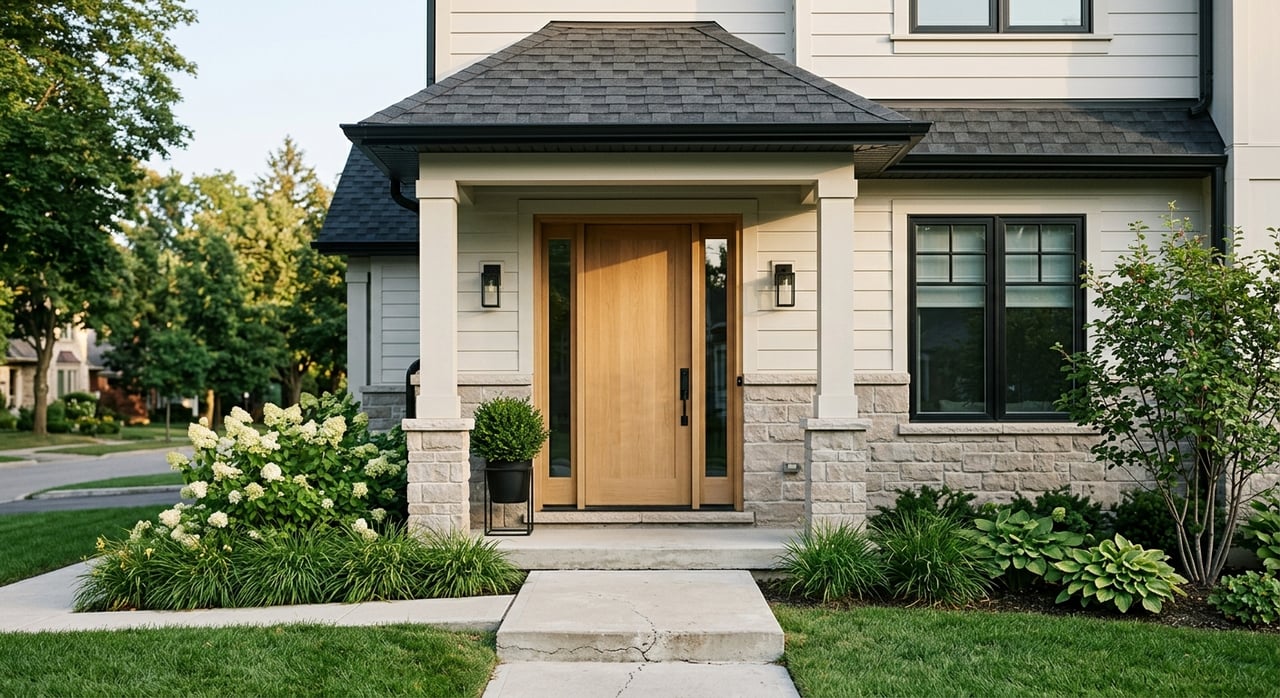
Downsizing In Old Oakville Without Leaving The Neighbourhood
June 11, 2026
June 11, 2026
Thinking about giving up the upkeep of a larger home, but not the lifestyle you love in Old Oakville? You are not alone. Many homeowners want less maintenance, more convenience, and a simpler monthly routine without leaving the streets, shops, parks, and waterfront they know well. The good news is that downsizing here can be less about leaving and more about choosing a better fit. Let’s dive in.
Old Oakville offers something many downsizers want but struggle to find: familiarity with flexibility. The area is a defined heritage district that stretches from south of Robinson Street to the lakefront and from Sixteen Mile Creek to Allan Street, with a focus on protecting the area’s character while guiding change in a consistent way.
That matters if you want to stay close to the setting you already enjoy. The district includes waterfront spaces such as Dingle and Lakeside Park, along with the Oakville Museum at Erchless Estate. For many homeowners, that means your downsizing move can keep the same walkable, central, lakeside feel.
There is also a practical side to this location. Downtown Oakville includes amenity-rich areas like Towne Square, and Oakville GO Station on the Lakeshore West corridor is the second-busiest GO station in the network after Union. If you want to reduce yard work and exterior maintenance while staying connected to daily errands and regional travel, that is a real advantage.
Oakville’s housing policies also support housing choice, rental housing, affordability, and complete communities while protecting the character of existing residential areas. In plain terms, that helps explain why smaller homes and attached housing remain part of the central Oakville mix.
In Old Oakville, downsizing is usually not a simple trade from a detached house to one standard condo model. It is more often a balance between location, interior size, and monthly carrying cost.
You may find options such as boutique condominiums, condo townhomes, or apartment-style suites in smaller buildings. That variety matters because downsizing does not have to mean tower living or giving up functional space.
A condominium can take many forms, including low-rise units, townhouse-style homes, stacked townhouses, and other shared-ownership formats. For you, that opens the door to a smaller footprint and less exterior maintenance while staying in the same neighborhood.
Several Old Oakville buildings often appeal to downsizers because they combine central location with manageable unit counts. Based on local building profiles, Wyndham Place at 128 Garden Drive has 99 units ranging from about 700 to 1,215 square feet, with listed prices from roughly $540,000 to $1,060,000 and monthly fees around $511 to $886.
Ashbury Square at 185 Robinson Street offers 56 units from about 650 to 1,710 square feet, with listed prices from about $560,000 to $1,480,000. Reported fees range from about $611 to $1,607, and the building mix includes both condominium apartments and townhome-style residences.
Town Square at 221 Robinson Street is another smaller-scale example, with 52 units from roughly 765 to 1,835 square feet. Listed prices run from about $560,000 to $1,510,000, with monthly fees around $566 to $1,357.
If your priority is premium finishes, large interior space, or a more exclusive building profile, One Eleven Forsythe at 111 Forsythe Street represents the higher end of the local market. The building has 68 units ranging from about 810 to 4,928 square feet, with listed prices from roughly $920,000 to $4,600,000 and monthly fees from about $712 to $4,336.
This type of move can work well if you want to simplify exterior upkeep without making a dramatic compromise on square footage. Still, it is less about saving money and more about changing how your housing costs are structured.
For some homeowners, the best downsizing fit is not a traditional apartment layout at all. Townhome-style condominium options can offer fewer stairs than a larger detached home, less exterior work, and a more familiar sense of separation than a typical corridor-based condo suite.
If you are worried that condo living automatically means a compact unit in a tall building, that is worth rethinking. In Old Oakville, the more relevant question is which format gives you the right mix of convenience, storage, privacy, and monthly cost.
When you downsize, the list price is only part of the story. A better comparison is total monthly carrying cost, which includes mortgage, property tax, condo fees, and any utilities or services not included in those fees.
This is especially important in Old Oakville because two homes with similar square footage can have very different monthly costs. Building age, amenity level, parking, and what the monthly fee includes can all change the picture.
For example, some of the local building profiles report fees that include maintenance, water, parking, or heat. That can make one higher-fee building look expensive at first glance, but more predictable when you compare the full monthly budget.
Property tax also remains a meaningful expense after you downsize. Oakville’s 2026 residential property tax rate is 0.850960 percent, which the Town states is about $850.96 per $100,000 of residential assessment.
The pricing gap between detached and attached homes helps explain why many homeowners start their downsizing search in this part of Oakville. According to April 2026 OMDREB data, Oakville’s average single-family price was $2.04 million, while the townhouse and condo average was $871,776.
That difference does not mean every attached home is a bargain. It does show that attached options generally sit well below detached pricing, which can free up equity or lower your monthly obligations depending on the move you make.
Inventory is part of the challenge. A citywide Oakville listing snapshot updated May 30, 2026 showed 225 active MLS listings, including 124 houses, 44 condo or apartment listings, and 39 townhouses.
That smaller pool helps explain why the right downsizer property can feel hard to find. In Old Oakville specifically, several of the most relevant buildings are quite small, ranging from about 52 to 99 units, so supply can feel tight even in a more balanced market.
If you are selling a larger home and buying a smaller one, you need to look at both sides of the market at once. The May 2026 OMDREB report for Halton Region said the townhouse and condo segment averaged $804,142, with average days on market at 29.
The same report noted that 83.1 percent of homes sold below asking, while 14.7 percent sold above list. For buyers, that suggests there may be room to negotiate in many cases. For sellers, it is a reminder that pricing needs to reflect current conditions, not past peak expectations.
This is where a valuation-led approach matters. If you are relying on the sale of a detached property to fund your next move, the timing, pricing, and structure of both transactions should work together, not as separate decisions.
Downsizing can reduce maintenance, but it does not eliminate due diligence. Before you buy, it helps to map out the full cash requirement and the ongoing monthly expense.
Here are some of the biggest items to review:
Ontario’s land transfer tax applies to real estate in the province. The current formula is 0.5 percent up to $55,000, 1 percent from $55,000 to $250,000, 1.5 percent from $250,000 to $400,000, 2 percent above $400,000 up to $2 million for one or two single-family residences, and 2.5 percent above $2 million.
Ontario also notes that HST applies to newly constructed or substantially renovated homes, but not to resale homes. If you are comparing a resale condo with a new-build condo or townhome, that difference can materially change the amount of cash you need at closing.
If your downsizing plan includes a resale condo or condo townhome, one document deserves special attention: the status certificate. In Ontario, the Condominium Authority of Ontario says this package can include the corporation’s governing documents, budget, audited financial statements, reserve fund study, common expenses, arrears, special assessments, insurance, and litigation information.
That is not a minor detail. It is one of the best tools for understanding the financial health and rules of the building before you commit.
The CAO also says the corporation can charge up to $100 including taxes and materials for the status certificate and must provide it within 10 days. For many downsizers, reviewing this document carefully is just as important as choosing the right floor plan.
Some buyers look at pre-construction to secure a newer unit and reduce future maintenance risk. If that is on your radar, Ontario says buyers of new condo units generally have a 10-day cooling-off period after receiving the signed agreement, disclosure statement, and buyers’ guide.
Cancellation rights can also arise if there is a significant material change. That does not remove the need for careful review, but it does mean the process works differently from a typical resale purchase.
Pre-construction can be appealing, but it should be evaluated with clear eyes. Deposit structure, occupancy timing, final closing costs, and HST treatment can all affect whether it truly fits your downsizing plan.
A good downsizing move usually starts with priorities, not listings. Before you start touring properties, define what matters most in your next home.
You may want to ask yourself:
Once those answers are clear, the search gets much more efficient. In a market where supply is limited and building profiles vary widely, clarity can save you time and help you avoid expensive compromises.
Downsizing in Old Oakville is rarely about leaving the neighborhood behind. More often, it is about choosing a home that fits your life now while keeping the character, convenience, and local connection that made you want to stay in the first place.
If you are weighing what to sell, what to buy, or how the numbers could work in today’s market, Paul Breakey can help you evaluate the tradeoffs with a calm, data-driven plan.
Stay up to date on the latest real estate trends.
With a background in finance and business operations, Paul brings a strategic approach to real estate, helping clients make informed decisions. His passion for community and commitment to client-focused service make him a trusted partner in achieving your real estate goals.
PAUL BREAKEY CPA, CA

OAKVILLE ON L6M 2W2
OAKVILLE ON L6J 1J3