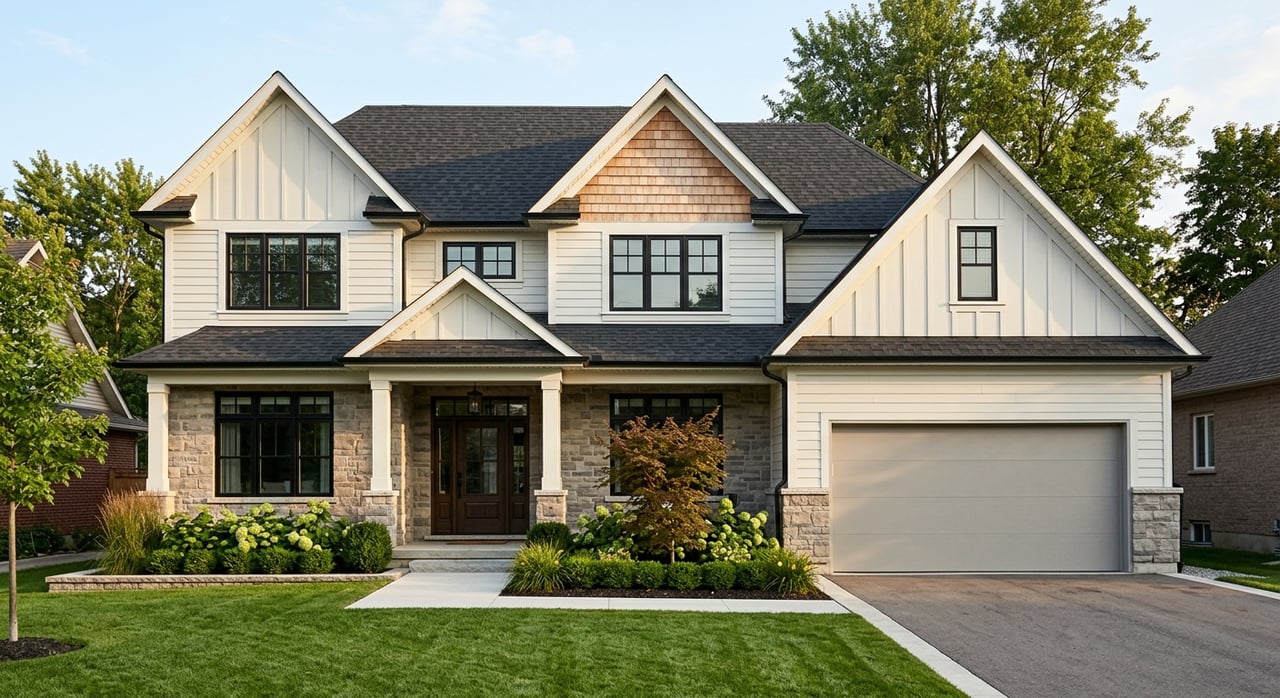
Oakville East vs West Real Estate: What Buyers Should Know
June 18, 2026
June 18, 2026
If you are trying to choose between East Oakville and West Oakville, the biggest mistake is assuming one side is simply better. The reality is more nuanced, and that is exactly why so many buyers pause here. When you look at the data, the price gap often comes down to which neighborhood and which home type you are comparing, not just which side of town a property sits on. Let’s break it down.
Oakville is a premium market overall. TRREB year-to-date 2026 data shows Oakville averaging about $1.443 million across all home types, above Halton Region at $1.175 million.
That town-wide number is useful, but it can also hide a lot. Oakville includes detached homes, townhouses, semis, and condos, and those segments are priced very differently. In May 2026, detached homes averaged $1.955 million, while condo apartments averaged $715,000.
That matters because east and west Oakville each include a mix of property types and price points. A simple east-versus-west comparison can miss the real story if you do not separate a lakefront detached home from an Uptown Core condo or a Glen Abbey townhouse.
There is no single official real estate boundary that splits Oakville into east and west. For buyers, a practical shorthand is the Sixteen Mile Creek and downtown corridor.
The town describes Sixteen Mile Creek as running through the center of Oakville, and the heritage trail system connects east and west Oakville. That makes the creek corridor a reasonable way to think about the market, even if it is not a formal MLS rule.
East Oakville includes some of the town’s oldest and best-known areas, especially the lakefront and east-of-creek communities. It is also one of the widest pricing ranges in town.
TRREB community snapshots from Q4 2024 show:
The first takeaway is simple: East Oakville is not one price band. It stretches from condo-oriented and more accessible pockets to some of Oakville’s highest-priced lakefront addresses.
A big part of East Oakville’s appeal is location and character. The town describes Old Oakville as a historically significant district with early homes, nineteenth-century lakeside cottages, turn-of-the-century houses, waterfront parks, and the Oakville Museum at Erchless Estate.
That kind of setting creates a different buyer experience than a newer suburban area. In practical terms, buyers are often paying for architectural character, lake proximity, downtown access, and a more established streetscape.
For commuters, the east and central side has an advantage many buyers notice quickly. Oakville GO is located at 214 Cross Avenue, with Oakville Transit and VIA Rail connections, and GO notes it is the busiest GO station outside Union Station.
If your routine depends on regional rail access, this can be a meaningful part of the decision. East-side locations can offer a shorter trip to the town’s central transit hub, along with easier access to the downtown road network and lakefront core.
The east side leans heavily into heritage and waterfront amenities. The downtown heritage district, Oakville Museum, Dingle Park, Lakeside Park, and the waterfront trail system all shape the experience.
For many buyers, that translates into a setting that feels more walkable, more established, and more tied to the lake. If that is your priority, East Oakville often stands out even before you start comparing individual homes.
West Oakville tells a different story. It is anchored by established suburban communities and the Bronte side of town, with pricing that is generally below Eastlake and Old Oakville but still well above entry-level Oakville condo segments.
TRREB community snapshots from Q4 2024 show:
These figures suggest that West Oakville often gives buyers access to larger suburban neighborhoods without the same top-tier lakefront premium seen in Eastlake or parts of Old Oakville. That does not make it inexpensive. It means the value equation is different.
The west side is shaped by established residential communities, parks, and the Bronte waterfront area. The town describes Bronte Village as southwest Oakville where Bronte Creek meets Lake Ontario, with shops, eateries, services, stable neighborhoods, and waterfront amenities.
Glen Abbey and River Oaks add another layer. These areas are tied to open space, residential neighborhoods, community facilities, and planned suburban growth patterns that many move-up buyers recognize and seek out.
West Oakville is often stronger on commute options than buyers first assume. Bronte GO, at 2104 Wyecroft Road, connects with Oakville Transit, and the Lakeshore West corridor runs east to Mississauga and Toronto and west to Burlington, Hamilton, and Niagara.
The Bronte GO area is also an official major transit station area. That supports a stronger transit-oriented growth story on the west side than many people expect when they first focus only on downtown Oakville.
Lifestyle on the west side tends to center on space, parks, and recreation. The Bronte Waterfront Strategy area, Bronte Creek Provincial Park, Glen Abbey Community Centre, River Oaks Community Centre, and the town’s trail network all support that pattern.
For many households, that can mean a more suburban day-to-day feel with easy access to outdoor space and community amenities. If your checklist starts with lot size, park access, and practical convenience, West Oakville often deserves a close look.
No, and this is where buyers can get tripped up.
At the high end, East Oakville clearly includes some of the town’s most expensive areas. Eastlake at $2.846 million and Old Oakville at $1.842 million sit well above many west-side averages.
But East Oakville also includes lower-priced segments like Uptown Core at $785,600 and College Park at $1.170 million. That means some east-side options can be more affordable than parts of West Oakville, depending on the property type and neighborhood.
This is also why median prices and neighborhood context matter. TRREB notes that average and median numbers can swing when the sales mix changes, especially in areas with fewer sales or a different concentration of luxury listings.
Most buyers are not choosing between “east” and “west” in the abstract. They are usually choosing between lifestyle packages tied to a budget.
A buyer looking at a condo apartment around Oakville’s broader condo price band of $715,000 is having a very different conversation from a buyer comparing detached homes near Oakville’s $1.955 million average. The same is true for townhouse buyers, where Oakville’s May 2026 average was $1.196 million.
East Oakville often fits buyers who care most about heritage surroundings, waterfront character, walkability, and easier access to Oakville GO and downtown. In those cases, the premium can make sense because the lifestyle tradeoff is very specific.
That is especially true if you are comparing older central neighborhoods to newer or more suburban alternatives. You may accept less interior space or a higher price per square foot in exchange for location and setting.
West Oakville often fits buyers who want more suburban space, strong park access, and practical commute options without stretching into the highest lakefront price bands. That can be especially relevant for move-up buyers comparing detached homes and townhomes.
In many cases, the west side offers a clearer path to more house for the money. The tradeoff may be less heritage character or a different daily rhythm than the downtown and lakefront core.
Oakville’s housing stock is still mostly single-detached, but lower-rise apartment growth has been strong, which is one reason condo and townhouse comparisons matter more than they used to.
If you are shopping in the condo or townhouse range, broad assumptions about east being pricier than west become even less reliable. East-side pockets like Uptown Core can offer a more accessible entry point, while west-side communities may appeal more if you are prioritizing suburban layout, community facilities, or access near Bronte GO.
The better question is not just “Which side is cheaper?” It is “Which side gives me the best match for my budget, commute, and home type?”
If you want a cleaner comparison, start with these filters:
This approach gives you a more useful answer than any broad east-versus-west headline. It also helps you avoid overpaying for features you may not use, or overlooking neighborhoods that fit your needs better than expected.
East Oakville and West Oakville are not competing for the exact same buyer. East Oakville tends to command stronger premiums where lakefront character, heritage setting, and downtown access are part of the package. West Oakville tends to appeal on space, parks, suburban convenience, and more moderate pricing in many established communities.
The right choice depends on what you are trying to optimize. If you treat the decision like both a lifestyle choice and a financial one, you will get much closer to the right fit.
If you want help comparing Oakville neighborhoods through a valuation-first lens, Paul Breakey can help you sort through the numbers, the tradeoffs, and the options that best match your goals.
Stay up to date on the latest real estate trends.
With a background in finance and business operations, Paul brings a strategic approach to real estate, helping clients make informed decisions. His passion for community and commitment to client-focused service make him a trusted partner in achieving your real estate goals.
PAUL BREAKEY CPA, CA

OAKVILLE ON L6M 2W2
OAKVILLE ON L6J 1J3