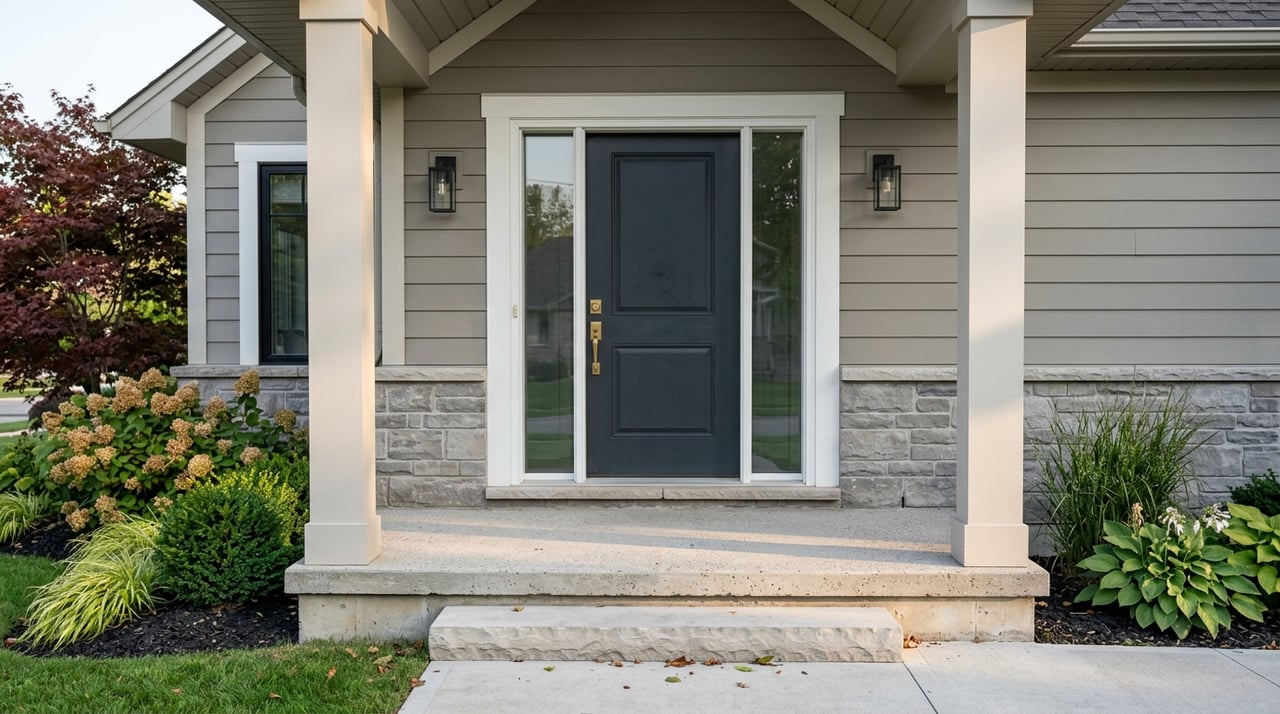
Falgarwood Sellers: Renovate Or List As-Is?
April 16, 2026
April 16, 2026
Wondering whether you should renovate before selling your Falgarwood home, or just list it as-is? It is a smart question, especially in a market where buyers are selective, homes are taking longer to sell, and not every dollar you spend comes back at closing. If you want to make a confident, financially sound decision, the key is to focus on what local buyers are likely to pay for, not just what looks appealing on paper. Let’s dive in.
Before you pick up a paintbrush or call a contractor, it helps to look at what the local market is telling you. In Falgarwood, the most useful benchmark is recent comparable sales, not a general assumption that renovations always pay off.
According to the TRREB Oakville community report for Q4 2025, Falgarwood saw 27 sales, a $1,045,844 average sale price, a $980,000 median sale price, a 96% average sale-to-list ratio, and 36 average days on market. That tells you buyers were active, but also measured.
The broader Halton market shows a similar pattern. The February 2026 Halton market report reported 380 residential transactions, an average of 35 days to sell, and noted that most homes were selling below asking. For sellers, that usually means pricing and condition matter more than ever.
A renovation can absolutely help your sale, but only when the market recognizes the value. If the work is too expensive, too personal, or out of step with what buyers expect in your price range, you may recover only part of the cost.
The Appraisal Institute of Canada cautions that over-improvement can be a problem, especially when the upgrades exceed neighborhood expectations. In plain terms, buyers in Falgarwood may appreciate your renovation, but that does not mean they will pay enough extra to make it worthwhile.
This is especially important in a more price-sensitive environment. The Canadian Home Builders' Association Renovation Market Index was below neutral in the second half of 2025, including 46.1 in Ontario, while renovation material costs had risen sharply over four years. That supports a cautious approach to major discretionary projects before listing.
If your home is already in decent shape, smaller and broadly appealing updates usually offer the best odds of improving your sale outcome. These are the kinds of changes buyers notice right away and can appreciate without needing your exact taste.
The Appraisal Institute of Canada highlights several pre-sale improvements that tend to help most:
For short-term sellers, AIC specifically notes that fresh paint, lighting, curb appeal, and decluttering are often the best value. These projects are relatively affordable, visible, and widely appealing.
There is also support for this from Royal LePage’s renovation survey. Their survey of 340 real estate professionals found average value-gain potential of:
That does not mean every project returns those exact numbers in Falgarwood. It does mean that simple, functional, buyer-friendly improvements tend to outperform highly customized upgrades.
Sometimes the best financial decision is to skip the renovation and price the home properly instead. That is often true when the required work is extensive, the timeline is tight, or the upgrades are unlikely to be fully recognized by buyers.
Listing as-is may make more sense if:
AIC also makes an important distinction between optional upgrades and maintenance items. Work such as roof replacement, HVAC updates, electrical updates, structural repairs, and worn windows or doors may be necessary to keep the property functional and marketable, even if they are not glamorous selling features.
So if your home has deferred maintenance, the question is not always “Should I renovate?” It may be “What must be addressed so the home can compete and avoid buyer concern?”
This is where a disciplined, valuation-led approach matters. The right question is not whether buyers will like an upgrade. The right question is whether they will pay enough more for it to justify the cost.
A practical way to decide is to ask three simple questions:
In a neighborhood where the average sale price was about $1.046 million in Q4 2025 and homes took about 36 days to sell, not every improvement will produce a strong return. That is why local comparable sales matter so much.
According to TRREB’s MLS overview, comparable sold, active, and expired listings can help determine a fair pricing range and show how condition affects market response. The Appraisal Institute of Canada also notes that renovation value is often assessed by analyzing multiple comparable properties.
If you are weighing renovate versus as-is, this simple framework can help you narrow the choice.
If your home is structurally sound and reasonably updated, focus on the visible items that help buyers feel the property is well cared for. Think paint, lighting, minor fixture updates, flooring touch-ups, landscaping, and decluttering.
This approach works well when your goal is to improve presentation without overspending. It can also help your listing photos, showings, and first impressions.
If your home needs expensive updates across several rooms, there is a good chance buyers will not fully reimburse you for a large pre-sale renovation. In that case, pricing appropriately and marketing clearly may produce a better result than trying to force a full makeover.
This is especially true if the likely buyer would prefer to choose their own finishes. A lower, well-supported list price can sometimes attract stronger interest than an over-renovated home priced above what local comparables support.
If you are on the fence, do not guess. A close decision is exactly when local comparable analysis or an appraisal can be most valuable.
A valuation-led review can help you compare the likely sale price in current condition against the likely sale price after targeted improvements. That turns the decision from an emotional one into a financial one.
If you decide to list as-is, that does not mean you can skip disclosure obligations. In Ontario, sellers still need to handle known issues carefully.
According to RECO, latent defects that make a property dangerous or unfit for habitation must be disclosed. RECO also notes that seller information statements may include known defects and renovation history, so keeping clear records matters.
That means it is wise to gather:
Good records support smoother conversations with buyers and can reduce uncertainty during the sale process.
In Falgarwood, renovating before you list can make sense, but usually only when the work is visible, cost-effective, and aligned with what local buyers are already paying for. Fresh paint, decluttering, lighting updates, and select kitchen or bathroom improvements may help your home show better and sell faster.
If the work is extensive, highly customized, or unlikely to produce a meaningful price lift, listing as-is with the right pricing strategy may be the stronger move. The best answer usually comes from comparing your home to recent Falgarwood sales and evaluating the likely return with a clear head.
If you want a data-driven opinion on whether to renovate or list as-is, Paul Breakey can help you assess local comparables, estimate likely market response, and choose the strategy that makes the most financial sense for your home.
Stay up to date on the latest real estate trends.


With a background in finance and business operations, Paul brings a strategic approach to real estate, helping clients make informed decisions. His passion for community and commitment to client-focused service make him a trusted partner in achieving your real estate goals.
PAUL BREAKEY CPA, CA

OAKVILLE ON L6M 2W2
OAKVILLE ON L6J 1J3