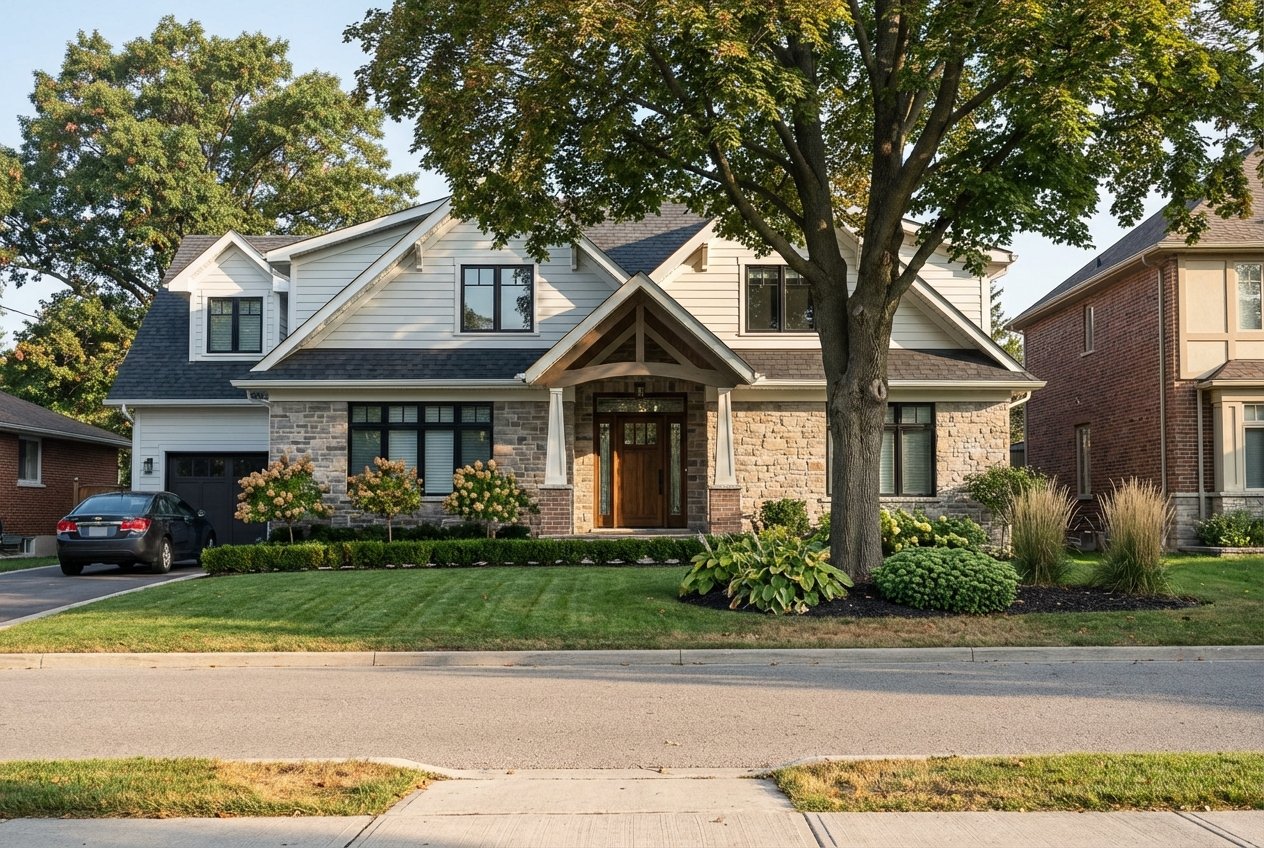
Planning Your Move From Toronto to Oakville in 2026
February 19, 2026
February 19, 2026
Wondering if the extra space and quieter streets in Oakville are worth leaving Toronto? If you are weighing a bigger home and top schools against a longer commute and a new routine, you are not alone. In this guide, you will get a clear, numbers-first look at prices, commute options, taxes, and the neighborhoods that fit a Toronto-to-Oakville move. Let’s dive in.
Oakville is a premium 905 market. Recent snapshots place typical sold prices around the low to mid $1.3M range in early 2026, with detached homes driving the average higher than townhomes and condos. You will see a wide band by property type and neighborhood, and a few high-end sales can pull the average up. For current figures, review the latest Oakville trends summary from Zolo’s market page, which tracks both pricing and inventory signals (Oakville housing trends).
Across the GTA, January 2026 data from TRREB showed softer average prices versus the prior year, as inventory improved. That gave buyers more choice and a bit more negotiating room in many submarkets (TRREB Market Watch). In Oakville, detached and executive low-rise homes command the highest prices, while townhouses and semis sit in the mid-range. Condos are typically the most affordable entry point for former Toronto condo owners.
Bottom line: price your search by product type, not headlines. A 3-bed Oakville townhouse and a 3-bed Toronto townhouse are the cleanest apples-to-apples comparison. A detached in Oakville will often price above many Toronto neighborhoods, while a condo buyer may trade up in space for similar or lower cost.
With more balanced conditions in early 2026, you can often take your time to review disclosures, book a second showing, and attach reasonable conditions. TRREB’s data indicates buyers have more leverage in several GTA pockets, so watch days on market and price reductions for signals that a seller may negotiate (TRREB Market Watch).
If one or both of you still work in downtown Toronto a few days a week, the GO train is the anchor. Oakville sits on the Lakeshore West line with two main stations: Bronte GO and Oakville GO. You will also find access to Clarkson Station for some west Oakville addresses. Review station pages for parking, bike storage, and bus connections before you pick a neighborhood (GO station details).
Express GO trips from Oakville GO to Union Station are commonly reported in the 30 to 35 minute range. All-stops runs can add roughly 15 or more minutes depending on the specific train you catch and which station you board. Metrolinx has made service changes and frequency upgrades on Lakeshore West in recent years, so always confirm the timetable for your exact travel date (Lakeshore West service update).
Pro tip: test your door-to-door commute on a weekday morning and evening using your target neighborhood, the train you plan to take, and a realistic station parking or bus connection plan.
Driving to downtown via the QEW and Gardiner can be 30 to 50 minutes off peak. At peak, plan for high variability, with 75 to 90 minutes possible on heavy congestion days. That variability is the core trade-off you weigh against the space and value you gain outside Toronto’s core.
Oakville Transit connects to GO with a co-fare, which reduces or reimburses local fare when you tap onto GO using PRESTO. This makes combining a short bus ride with the train cost-effective for non-drivers (Oakville Transit co-fare details). If you plan to park at the station, check capacity patterns and arrive early for popular express runs.
Each Oakville area offers a different mix of housing, access, and lifestyle. Here is a quick, neutral overview to help you shortlist based on your priorities.
Close to the lake with a walkable main street feel, cafes, and restaurants. You will find a mix of heritage homes and smaller lots, plus proximity to Oakville GO. Buyers often choose this area for its character and station access.
A marina setting and a village feel near the lake, with condo and townhome options close to Bronte GO. It is a strong fit if you want a lakeside lifestyle and a straightforward train commute.
Established subdivisions with parks, trails, and a range of single-family homes. Many family buyers target these areas for larger homes relative to price and access to a range of schools and amenities.
Newer mid-rise and condo product, big-box retail, and quick access to major corridors. It is a good entry point for Toronto condo owners who want more space and value, and it sits close to Sheridan College’s Trafalgar campus, which is a local academic anchor (Sheridan Trafalgar overview).
Halton District School Board reports strong results on provincial measures and in independent rankings. This is a recurring driver of family demand and, by extension, pricing in many Oakville neighborhoods. Review board updates to understand how schools are performing across the town (HDSB EQAO and rankings update).
Healthcare access is strong, with Oakville Trafalgar Memorial Hospital serving as the regional acute-care hub. You will also find a wide network of family medicine and specialist clinics distributed across the town.
Buying in Oakville means you pay Ontario’s provincial Land Transfer Tax but not Toronto’s Municipal Land Transfer Tax. That difference can save you thousands on closing day, depending on your purchase price. Use the provincial guide to confirm brackets and any first-time buyer rebate eligibility, and review Toronto’s MLTT page if you are comparing an Oakville purchase to a hypothetical Toronto purchase (Ontario LTT guide, Toronto MLTT program).
Your annual property tax bill depends on the municipal rate and the assessed value of your home. Oakville has highlighted historically competitive increases in recent municipal reporting. For your budget, multiply the current rate by the assessed value on your property assessment to estimate the annual tax, then divide by 12 for a monthly figure. Add utilities, maintenance, and insurance line items, which may be higher for a larger home than a downtown condo.
Compare train and driving costs with a simple monthly framework:
Run both for a typical month. If you split days between office and home, the train often pencils out well, especially with co-fare savings on the first and last mile.
Use this framework to move from research to a confident plan:
If you value space, schools, and a calmer daily rhythm, Oakville offers a strong case for moving west of Toronto. Pricing sits at a premium for detached homes, but condos and townhouses can deliver more space for a similar budget compared to many Toronto options. Your best outcome comes from matching property type to budget, confirming the true door-to-door commute, and planning for taxes and operating costs with care. When you make the numbers and the lifestyle line up, the decision becomes straightforward.
Ready for a data-led plan tailored to your move? Connect with Paul Breakey for a valuation-first strategy, neighborhood shortlists that fit your commute, and calm, finance-trained negotiation.
Stay up to date on the latest real estate trends.
With a background in finance and business operations, Paul brings a strategic approach to real estate, helping clients make informed decisions. His passion for community and commitment to client-focused service make him a trusted partner in achieving your real estate goals.
PAUL BREAKEY CPA, CA

OAKVILLE ON L6M 2W2
OAKVILLE ON L6J 1J3